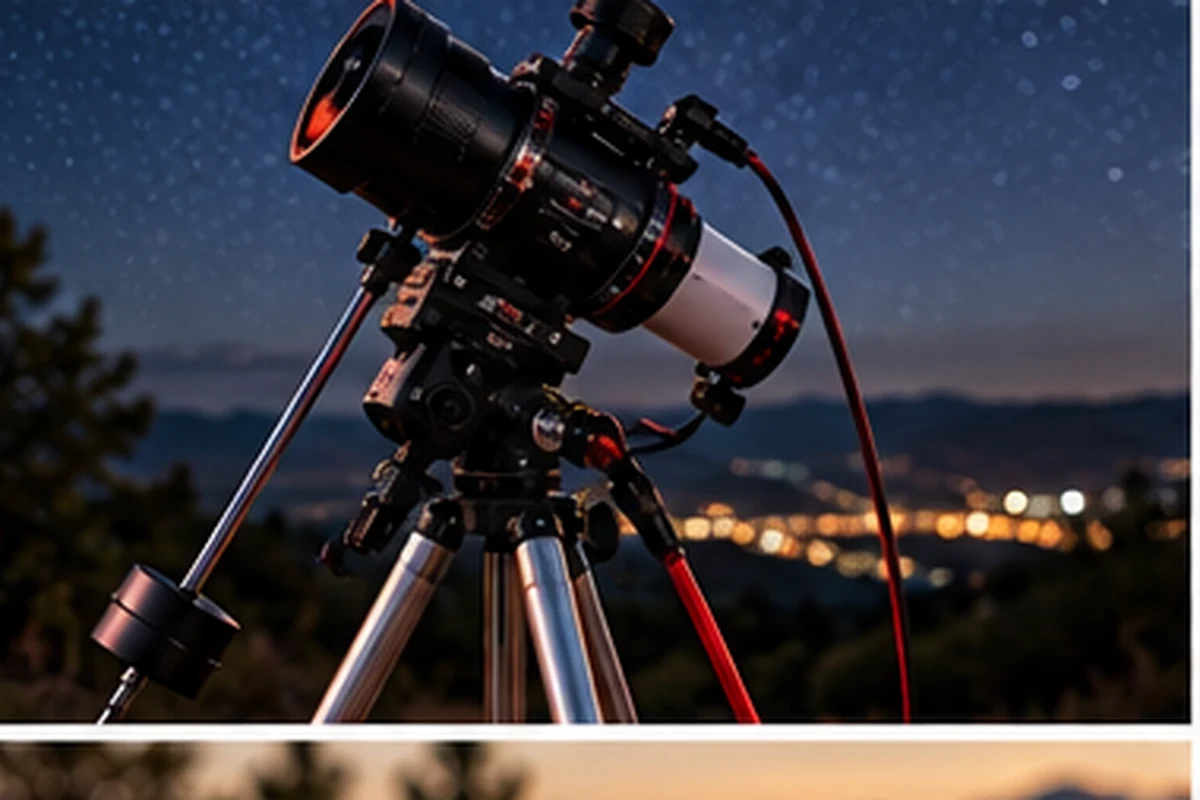
Astronomy accessories are easy to buy one at a time and surprisingly hard to build into a coherent system. This guide treats best guide scopes for astrophotography as part of the full observing chain: telescope or camera, mount, optics, power, transport, sky conditions and the person actually using it.
Use listings to compare exact fit, included parts, generation and seller terms. Verify compatibility independently.
Start with the observing job, not the catalog
A guide scope should provide a useful guide-star field while staying rigidly coupled to the imaging telescope. Astronomy shopping gets expensive when the purchase starts with a product category instead of a target and a complete optical/mechanical chain. Write down what you are trying to see or photograph, which telescope or camera will be used, how the system is mounted, and whether the gear must travel. Those answers eliminate more bad purchases than another hour of spec-sheet comparison.
For this category, the first three questions are guide-scope focal length, aperture and star field, and focuser stability. Treat those as hard filters. A product that fails one of them is not rescued by a larger accessory bundle or a lower price.
Three realistic use cases
Short Refractors
For short refractors, prioritize guide-scope focal length and aperture and star field. The goal is a setup that is quick to deploy and easy to repeat. If the accessory forces a new adapter chain, balance problem, cable route or storage problem, count those costs as part of the purchase rather than treating them as surprises later.
Camera-Lens Rigs
For camera-lens rigs, prioritize aperture and star field and focuser stability. The goal is a setup that is quick to deploy and easy to repeat. If the accessory forces a new adapter chain, balance problem, cable route or storage problem, count those costs as part of the purchase rather than treating them as surprises later.
Portable Equatorial Setups
For portable equatorial setups, prioritize focuser stability and mounting rigidity. The goal is a setup that is quick to deploy and easy to repeat. If the accessory forces a new adapter chain, balance problem, cable route or storage problem, count those costs as part of the purchase rather than treating them as surprises later.
Specifications that actually change the decision
Guide-Scope Focal Length
Measure or calculate this before shopping. Listing photos are useful for context but they are not dimensions. For guide-scope focal length, record the requirement from your telescope, camera, mount or current accessory and then compare only products that state a compatible value explicitly.
Aperture And Star Field
Compare the specification with the rest of the optical train. Astronomy parts are often standardized only up to a point. For aperture and star field, record the requirement from your telescope, camera, mount or current accessory and then compare only products that state a compatible value explicitly.
Focuser Stability
Think about nighttime ergonomics as well as raw performance. Small controls can become irritating in gloves and darkness. For focuser stability, record the requirement from your telescope, camera, mount or current accessory and then compare only products that state a compatible value explicitly.
Mounting Rigidity
If the value affects balance, focus, power or field of view, test the complete system on paper before ordering. For mounting rigidity, record the requirement from your telescope, camera, mount or current accessory and then compare only products that state a compatible value explicitly.
Pairing With Guide-Camera Pixel Size
Prefer a clearly documented ordinary interface over a proprietary mystery part unless the proprietary part solves a real problem. For pairing with guide-camera pixel size, record the requirement from your telescope, camera, mount or current accessory and then compare only products that state a compatible value explicitly.
The technical point that prevents most bad buys
Guiding corrects mount tracking, but it cannot correct flexure between the guide scope and the imaging telescope.
Astronomy equipment is unusually sensitive to system interactions. A heavier accessory changes balance. An extra optical element changes spacing. A different connector can change power reliability. A wider field can expose aberrations that were invisible before. The correct purchase is therefore the one that solves the intended problem without creating two new interface problems.
Red flags in listings
- Mounting in a flexible finder shoe. Treat this as a reason to slow down and verify the exact model, dimensions or interface rather than assuming the listing is close enough.
- Chasing excessive guide focal length. Treat this as a reason to slow down and verify the exact model, dimensions or interface rather than assuming the listing is close enough.
- Ignoring differential flexure on longer imaging focal lengths. Treat this as a reason to slow down and verify the exact model, dimensions or interface rather than assuming the listing is close enough.
Used gear can be excellent, but inspect the system
Many astronomy accessories have long useful lives, and used equipment can be a smart way to buy better mechanics or optics for the same budget. Inspect glass under ordinary reflected light. Check threads for cross-threading, clamps for gouging, cables for brittle strain relief, knobs for play, and moving parts for smooth travel. For electronics, identify the exact generation and test it with the correct supply and software before treating a bundle as complete.
Missing proprietary adapters can erase a bargain quickly. Search the replacement part before buying the main item. If the accessory is old enough that documentation has disappeared, save photos of labels and connectors and price the complete path to a working setup.
Field ergonomics matter more than they look online
At a desk, every accessory is easy to touch and every label is readable. In a field at 1 a.m., you may be wearing gloves, using dim red light, trying not to bump polar alignment, and routing cables around a mount that must move freely. Favor controls you can identify by feel, latches that cannot spill optics in the dark, and cables long enough to move without becoming trip hazards.
If the system travels, add setup steps to the decision. The best-performing component on paper is not always the best component for a rig that must be assembled from a car, carried across a field and packed again while damp and tired.
How to compare prices without fooling yourself
Compare the complete working system, not the headline price. Include adapters, rings, replacement caps, mounting hardware, controller cables, power supplies, filter sizes and cases. Two products with the same purchase price can have very different ownership costs when one uses common standards and the other needs a chain of proprietary parts.
Marketplace prices move constantly, so this guide intentionally avoids pretending that one price is permanent. Use the live search buttons to see current inventory, then return to the compatibility checklist before checkout.
- Verify guide-scope focal length from the actual telescope, camera, mount or accessory documentation.
- Verify aperture and star field from the actual telescope, camera, mount or accessory documentation.
- Verify focuser stability from the actual telescope, camera, mount or accessory documentation.
- Verify mounting rigidity from the actual telescope, camera, mount or accessory documentation.
- Verify pairing with guide-camera pixel size from the actual telescope, camera, mount or accessory documentation.
Use listings to compare exact fit, included parts, generation and seller terms. Verify compatibility independently.
Build the complete system cost
Before checkout, list every part needed to use the accessory on night one. Include adapters, rings, replacement caps, mounting hardware, controller cables, power supplies, filter sizes and cases. Then ask whether the same money would improve the system more somewhere else. A stable mount, better dark-sky access or a missing dew solution can outperform a glamorous accessory that solves a problem you do not actually have.
Also consider reversibility. Standard barrels, common astronomy threads, ordinary USB connections and widely supported dovetails tend to move with you when the telescope changes. Proprietary parts are sometimes excellent, but they should earn the lock-in by solving a specific problem better.
Purchase worksheet
Guide-Scope Focal Length
Write down the exact requirement for guide-scope focal length, what the current system already provides, and what would change after the purchase. Separate hard compatibility from preference. If a listing leaves a hard requirement ambiguous, it has not passed the compatibility check yet.
Aperture And Star Field
Write down the exact requirement for aperture and star field, what the current system already provides, and what would change after the purchase. Separate hard compatibility from preference. If a listing leaves a hard requirement ambiguous, it has not passed the compatibility check yet.
Focuser Stability
Write down the exact requirement for focuser stability, what the current system already provides, and what would change after the purchase. Separate hard compatibility from preference. If a listing leaves a hard requirement ambiguous, it has not passed the compatibility check yet.
Mounting Rigidity
Write down the exact requirement for mounting rigidity, what the current system already provides, and what would change after the purchase. Separate hard compatibility from preference. If a listing leaves a hard requirement ambiguous, it has not passed the compatibility check yet.
Pairing With Guide-Camera Pixel Size
Write down the exact requirement for pairing with guide-camera pixel size, what the current system already provides, and what would change after the purchase. Separate hard compatibility from preference. If a listing leaves a hard requirement ambiguous, it has not passed the compatibility check yet.
Related AstronomyEquipment guides
Frequently asked questions
What should I check first when shopping for guide scopes for astrophotography?
Start with guide-scope focal length. If that requirement does not match your equipment or observing goal, the rest of the feature list is secondary.
Should I buy the most expensive option?
Not automatically. Compatibility, mechanical quality, field ergonomics and support for ordinary replacement parts matter more than price alone.
Is buying used reasonable for this kind of astronomy gear?
Often yes. Inspect the exact model, optics or mechanics, included adapters and any electronics before deciding the used bundle is complete.
Why do astronomy accessories that look identical sometimes not fit?
Thread pitch, barrel size, optical spacing, connector polarity, mounting shoes and model generations can differ even when product photos look similar.
Should I buy extra capacity for future upgrades?
Some margin is useful, but oversized accessories can add weight, cost, balance problems or power demand. Buy around a plausible next step, not every future telescope.
What is the safest way to use marketplace listings?
Use them to compare exact photos, model numbers, included parts and condition. Verify critical compatibility against the equipment maker or a measured interface before ordering.
Use listings to compare exact fit, included parts, generation and seller terms. Verify compatibility independently.
Technical references
Reference material checked for this guide. Manufacturer pages describe their own products; use them for interfaces and documented behavior, not as independent rankings.